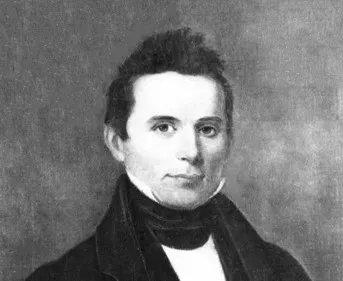
Germanus of Auxerre Against the Pelagian Heresy

Many Christians are familiar with Pelagius, the Celtic monk who challenged Augustine of Hippo’s prayer, “Give what you command, and command what you will.” According to Pelagius, this was a useless prayer, because human beings already have what is necessary to obey God’s commands. All have, he said, the free will and ability to save themselves, but only those who “by the right use of free will merit the Lord’s grace and keep His commandments” “deserve to be rewarded” and are “assisted by grace.”[1] which is something they need to merit.
Fiercely opposed by Augustine, who believed that grace is an unmerited gift of God to sinners who are unable to help themselves, Pelagius’s teachings were condemned first at the Council of Carthage (418) and then at the Council of Ephesus (431).
These teachings, however, continued to have a significant influence in his native British islands, prompting the local bishops to ask the church on the continent for help. The principal man chosen to combat this heresy was Germanus of Auxerre.
Germanus of Auxerre
Germanus was born around 389 to a prominent family of Auxerre, southeast of Paris. After studying law and rhetoric in Rome, he served as a lawyer until the emperor of the Western Roman Empire, Flavius Honorius, appointed him as provincial governor in Armorica (now Britanny), Gaul.
Germanus’s biographer, Constantius (a priest from Lyons) wrote of Germanus’s love for hunting. It was a common pastime, but when Germanus hung his hunting trophies on a tree associated with pagan rites, the bishop of Auxerre, Amador, thought he had crossed a line. Swiftly, Amador cut down the tree and burned it together with the trophies. According to some accounts, he later motivated Germanus to devote his life to Christ. Encouraged by the young man’s progress, he eyed him as a potential successor to his seat.
Amador’s hopes materialized in 418, when Germanus was chosen as bishop of Auxerre. As was the case with other bishops at that time, we read that Germanus resisted the appointment until he yielded to the insistence of the people. Once elected, he took his new vocation seriously. He gave his possessions to the poor, ate sparingly, often fasted for several days, slept on a hard bed, and wore monastic clothing.
Mission to Britain
Along with these habits, he nurtured a resolute passion for Christian orthodoxy. This is why in 429 he was chosen, either by a council of bishops or by Pope Celestine I, to travel to Britain and confront the pervasive Pelagian heresy.
This was a difficult time in the Western Roman Empire. The Roman army could hardly keep up with the frequent incursions of populations uprooted by the advance of the Huns. The sack of Rome by Alaric, king of the Visigoths, in 410, shocked a world that thought of Rome as the eternal city.
The same year marked the exit of Roman troops from Britain, which encouraged invasions by Saxons and Picts. In this fearful climate, however, the church’s main concern was for the preservation of the gospel.
Germanus was accompanied in his mission by Lupus, bishop of Troyes, who shared Germanus’s background as a lawyer and Germanus’s passion for sound doctrine. According to Constantius, these men were considered “the leading lights of religion.”[2]
Constantius, as well as the renowned British scholar Bede, tell of many miracles performed by Germanus, as well as his persistent preaching in churches and cross-roads. According to Bede, Germanus even commanded an army against combined forces of Saxons and Picts and led them to retreat by ordering his troops to shout “Alleluia” as loud as they could for three times. The noise scared the enemies who ran away, with many of them drowning in a river. Similar accounts are told of Lupus.
But, as colorful as the lives of these men may have been, their relevance resides in their successful mission to eradicate Pelagianism from Britain. According to Constantius, “this damnable heresy had been thus stamped out, its authors refuted, and the minds of all reestablished in the true faith.”[3]
“There followed sermons to the people to confute the heresy, the preachers of which were by common consent banished from the island. They were brought to the bishops to be conducted to the Continent, so that the country might be purged of them and they of their errors. The effect of all this was so salutary that even now the faith is persisting intact in those parts. And so, with everything settled, the blessed bishops made a prosperous journey back to their own country.”[4]
Unsung Heroes
Back in Gaul, Germanus and Lupus resumed their work as bishops. After discovering that the people of Armorica had been in rebellion against the emperor, Germanus traveled to the imperial court in Ravenna, Italy, to beg for pardon. The pardon was granted, but Germanus died in that city on 31 July, 450.
As for Lupus, some sources report that he saved Troyes from an attack by the Huns by personally confronting Attila. Apparently, Attila was so impressed by Lupus that he asked him to accompany him and his army to the River Rhine as a source of divine protection. Interpreted as treason by the Roman authorities, Lupus’s courteous concession placed him on a “most wanted” list, forcing him to hide for two years before he could safely return. He died in Troyes in 478.
Hardly remembered today, these men were instrumental in preserving the orthodox Christian faith in Britain.
[1] Pelagius, “Letter and Confession of Faith to Innocent I,” Early Church Texts, https://earlychurchtexts.com/public/pelagius_letter_and_confession_to_innocent.htm
[2] Constantius, Vita sancti Germani, ed. Robert Vermaat, Vortigern Studies, Chpt. 12, https://www.vortigernstudies.org.uk/artsou/constex.htm
[3] Ibid., chpt. 16.
[4] Ibid, chpt. 27
Image By Mattana – Own work, CC BY-SA 3.0, https://commons.wikimedia.org/w/index.php?curid=3675106