The Marytdom of the Scottish Covenanter Hugh M’Kail

On December 22nd, 1666, the Market-Cross of Edinburgh was filled with a crowd of teary-eyed spectators. The cause of their lament was the young man of twenty-six-years-of-age who was being hung from the gallows before them. His name was Hugh M’Kail, a minister of the gospel, and Scottish Covenanter.
Hugh M’Kail bore all the markings of a promising ministry. In 1661, he was ordained at age twenty to gospel ministry, and licensed by the Presbytery of Edinburgh. He was, evidently, well-respected, well-learned, and well-loved by the people of Scotland. He was known to be a man of great prayer, who would spend one day each week fasting as he prayed for the Church at large, and God’s Kirk in Scotland especially.
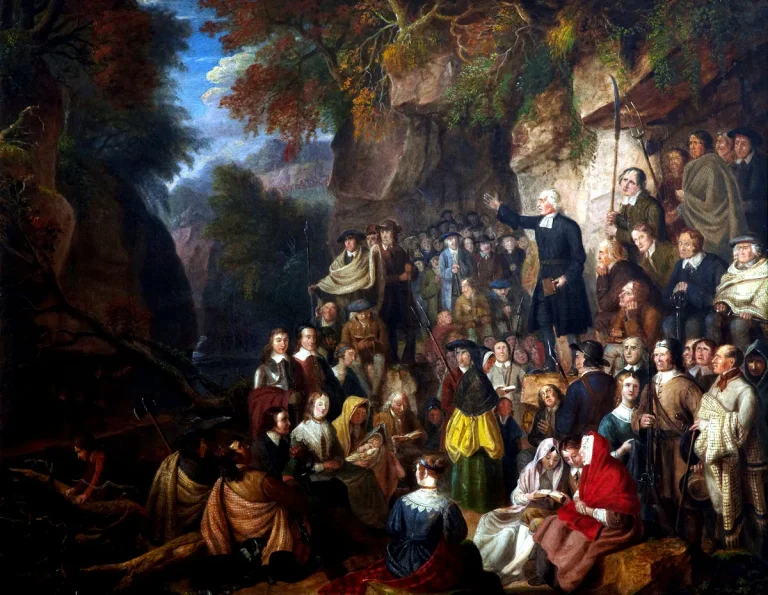
As a Presbyterian and Covenanter, his public ministry coincided with a time of great persecution for those who practiced such things. With their adoption of Presbyterian church government, alongside a simplified worship holding to what is known as the Regulative Principle (the belief that we must worship God only as He has explicitly commanded within His Word), and their practice of extemporaneous prayers (a practice at odds with the Church of England’s own practice of having ministers pray from the Book of Common Prayer), men like M’Kail not only watched their own brothers in ministry persecuted and martyred for practicing their faith, but felt the very real cross-hairs of their enemies aimed at their heads.
M’Kail felt the very real burden of ministering faithfully in an age where faithfulness could get one quickly ejected from their pulpits, or worse. In fact, in 1640, Hugh’s father, Matthew, was forced out of his own pulpit in Bothwell. Persecution was not so much a matter of if, but when.
The Boldness of M’Kail
Despite the danger, M’Kail demonstrated that gospel boldness peculiar to genuine ministers of Christ during times of great persecution. On September 1st, 1662, he would preach his final public sermon in the High Kirk of Edinburgh on the text of Song of Songs 1:7: “Tell me, O thou whom my soul loveth, where thou feedest, where thou makest thy flock to rest at noon: for why should I be as one that turneth aside by the flocks of thy companions?”
Though the text may seem to have had little consequence to the governing authorities of M’Kail’s day, he made several comments in the sermon that would see him accused of rebellion. Concerning the severe persecution that the Covenanters and Scottish Kirk had been experiencing, M’Kail preached “that the Church and people of God had been persecuted, both by a Pharaoh upon the throne, a Haman in the state, and a Judas in the Church.”[1] Though M’Kail did not name any governing authority within this sermon as a Pharaoh, Haman, or Judas, this was nonetheless enough to earn a charge of treason and rebellion.
M’Kail managed to escape immediate arrest and would take shelter first at his father’s home, before eventually traveling away from his homeland to continue the work of his studies. But eventually, he would return home, and he would find his enemies awaiting him with chains.
The Trial of M’Kail
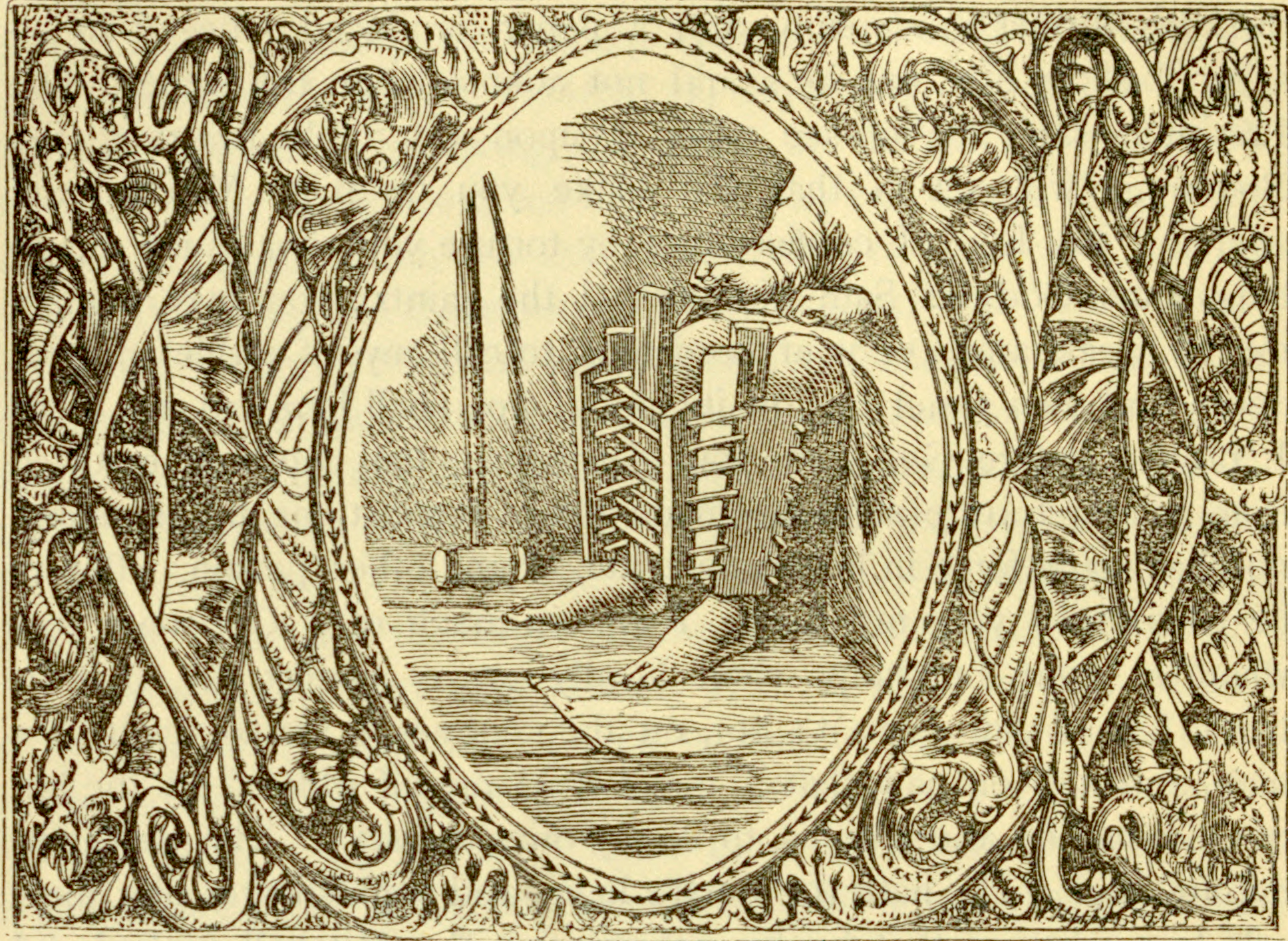
His trial began on December 4th, 1666. Though he had not actually committed any crime of treason or rebellion, the Council appeared to have determined to have him tortured and hung before he had ever had opportunity to stand before them. In fact, when M’Kail failed to produce any testimony against himself, swearing that he had confessed to the Council all he knew (which was not enough to bring about any sort of truly just conviction), the Council ordered the executioner to bring about a confession by way of “the boot,” which was a form of torture. Charles McCrie described the torture in this way:
the boot… being a cylinder of wood or iron into which the leg was forced, and wooden wedges then driven in with blows from a hammer or mallet. So excruciating were the agonies of the victims and so piercing their shrieks that even hardened officials hastened out of the room when these engines of torture were brought in, and it was found necessary to pass an order of Council that members keep their seats while “the question” was being thus “put.”[2]
Despite the agonizing torture put to M’Kail, his story did not change, and he continued to swear that he had nothing more to share and had hidden no details from the Council. Nonetheless, less than a week later, on December 10th, he and several others were indicted on charges of treason. He was to appear before the Council and the Justices on December 12th, but the brutal torture he had endured had thrown him into sickness and a fever, which made his appearance impossible. He requested, on December 11th, to be given more time, as the fever had incapacitated him—not to mention the fact that his leg had been crushed by the executioner as they attempted to extract a confession of treason that did not exist, and walking was not something that would come easy to him.
Not to be deterred, and despite several doctors attesting to the fact that M’Kail was now quite ill, the Council would delay no longer and ordered M’Kail to appear before them on December 18th. Perhaps it was to their astonishment that when the young minister did appear, he took the opportunity to defend his beliefs. It was reported that he said:
That he was not ashamed to avow that he was one of that afflicted and persecuted party and persuasion called Presbyterian. Then he spoke of the ties and engagements that were upon the land to God; and having commended the institution, dignity, and blessing of Presbyterian government, he said, that the last words of the National Covenant had always great weight upon his spirit.[3]
The Justices asked him to not speak of his religious persuasions, for he was not being charged for his beliefs, but for treason. M’Kail, knowing better, insisted that he had done so by manner of conviction, knowing that it would be utterly sinful to remain silent and so fail to speak of his Savior now that he was standing beneath the shadow of death.
No real evidence could be produced against him, but the sentence from the Jury came all the same: M’Kail would be hung on December 22nd.
The young man’s response? “O how good news; to be within four days’ journey to enjoy the sight of Jesus Christ!”[4]
The Martyrdom of M’Kail
Hugh M’Kail’s faith carried him through his trial and subsequent hanging. Not only did he speak of the glory of seeing Christ face to face, but he willingly accepted the will of the Lord, saying: “’The Lord giveth life, and the Lord taketh, blessed be the name of the Lord.’” And, “Though men cut us off, God will receive us; trust in God; trust in God.”[5]
He would spend his remaining hours on earth in both prayer and conversation with other Christians. In fact, on the last evening of his life, it was reported that he spent his time preaching and comforting the saints by answering various questions. Here, we quote from Crookshank’s History at length to see both the questions posed and the young Covenanter’s answers:
As, first, ‘How should he, going from the Tolbooth, through a multitude of gazing people and guards of soldiers, to a scaffold and gibbet, overcome the impression of all these?” To which he answered: 1. ‘By conceiving a deeper impression of a multitude of angels, who are also onlookers; according to that, we are a gazing-stock to the world, angels and men; for the angels, rejoicing at our good confession, are present to con. vey and carry our souls, as the soul of Lazarus, into Abraham’s bosom; not to receive them, for that is Jesus Christ’s work alone, who will welcome them to heaven himself, with the songs of angels and blessed spirits. But the angels are ministering spirits, always ready to serve and strengthen all dying believers. 2. As Stephen saw the heavens opened, and Jesus standing at the right hand of God, who then said, ‘Lord Jesus, receive my spirit,’ so, said he, do I believe that Jesus Christ is also ready to receive his dying sufferers.
Second. He inquired, ‘what is the way for us to conceive of heaven, who are hastening to it, since the word says, ‘eye hath not seen, nor ear heard,’ &c. To this he answered,一
‘the Scriptures help us these two ways: 1. By way of similitude, as Rev. xxi. when heaven is held forth by a representation of a glorious city there described; and in the same place it is also termed the bride; but O how unlike are these two, a bride and a city? which shows the insufficiency and vast disproportion of all such similitudes; and therefore he added, 2. That the Scripture furnisheth yet a more excellent way to conceive of heaven, viz., by conceiving the love of Christ to us, even the breadth, and length, the depth, height, and immenseness of that love of Christ, which passeth knowledge, and which is also the highest and sweetest motive of praise, ‘unto him that loved us,’ &c. and by holding forth the love of the saints to Christ, and teaching us to love him in sincerity, which is the very joy and exultation of heaven, Rev. v. 12. ‘Worthy is the Lamb that was slain, to receive power, and riches, and wisdom, and strength, and honour, and glory, and blessing.’ And no other thing but the soul breathing forth love to Jesus Christ, can rightly apprehend the joys of heaven.’[6]
Entering the gallows and having the noose placed around his neck, it was reported that he was the very image of perfect Christian peace. In those final moments, to the crowd of spectators, he would preach both his dedication to the Lord, and—despite charges of treason—true loyalty to the King, for whom he had been diligent in prayer:
Although I be judged and condemned as a rebel amongst men, yet I hope, even in order to this action, to be accepted as loyal before God. Nay, there can be no greater act of loyality to the king, as the times now go, than for every man to do his utmost for the extirpation of that abominable plant, prelacy, which is the bane of the throne and of the country, which if it be not done, the throne shall never be established in righteousness, until these wicked be removed from before it. Sure I am, these, who are now condemned as rebels against him, are such as have spent much time in prayer for him, and do more sincerely wish his standing, and have endeavoured it more by this late action, so much condemned, than the Prelates by condemning them to death.[7]
Finally, he assured the tearful crowd, “friends and fellow-sufferers, every step of this ladder is a degree nearer heaven.”[8]
Thus, on December 22nd, 1666, Hugh M’Kail’s body fell from the gallows, his life extinguished with a noose, but his spirit sent to the presence of his Savior, Jesus Christ.
What Can We Learn from M’Kail?
This young martyr teaches us, first, the joy of knowing Christ. With a broken leg and a noose tied around his neck, he went joyfully to his death because he knew that Christ would appear before him as he took his final breath. He knew that his Redeemer lives, and that though he would close his eyes in death that cold December day, he would be embraced warmly by His Savior. Then, one day, he would once more stand upon the earth, physically raised, alongside Christ.
If Christ is our great treasure, as He was (and is) M’Kail’s, we can have this same joy, no matter what trials, hardships, or persecutions we may face.
Second, M’Kail teaches us the importance of facing our adversaries with gospel clarity, theological convictions, and faithful boldness. It is unsurprising when we, as Christians, find ourselves hated and despised by the world. It is no shock to hear slander hurled at us. M’Kail, evidently, had imagined that martyrdom was very much possible when he entered ministry within the Presbyterian Kirk. He did it, anyway. He knew, when he preached on September 1st, 1662, that speaking of the Kirk’s persecution as coming from the hands of Pharaohs, Hamans, and Judases was the sort of thing that could put him on the gallows before a crowd of spectators. He did it anyway. He knew that, standing before a Council in December of 1666, defending his Covenanter convictions would do little to earn favor with the authorities. He did it anyway.
The point here is that M’Kail had courage because he knew Christ and His gospel, and our enemies appear quite small when the sovereign power of God is in view. As Christ said, “fear not them which kill the body, but are not able to kill the soul: but rather fear him which is able to destroy both soul and body in hell” (Matt. 10:28).
Third, M’Kail demonstrates the peace and hope that Christ has secured for the Christian, even when facing death. The young man had been threatened, tortured, and stood before a crowd of onlookers who would carefully watch him as he struggled in his final moments with noose around his neck. But his final words were pure gospel, pure hope, and pure peace.
Only God knows what M’Kail may have accomplished if he had been given another forty years of public ministry. But what he did accomplish was nothing short of miraculous, for by facing death with courage and hope, he sowed seeds of the gospel to everyone in the crowd that day. Who is to say what fruit was borne from his martyrdom? Only God knows. So, we recall the words of Jesus once more: “Verily, verily, I say unto you, Except a corn of wheat fall into the ground and die, it abideth alone: but if it die, it bringeth forth much fruit” (Jn. 12:24).
[1] The Reformed Presbyterian Vol. 3, ed. by Rev. R. M. Roney, (Newburgh: J.D. Spalding, 1839), 150. According to an editor’s note, this entire section appears to have been taken from another work, Crookshank’s History of the state and sufferings of the Church of Scotland, from the Reformation to the Revolution.
[2] Charles McCrie, The Free Church of Scotland: Her Ancestry, Her Claims, and Her Conflicts (Edinburgh: T. & T. Clark, 1893), 50.
[3] The Reformed Presbyterian Vol. 3, ed. by Rev. R. M. Roney, 151.
[4] Ibid., 152.
[5] Ibid.
[6] Ibid., 152-53.
[7] Ibid., 153-54.
[8] Ibid., 154.