Names of God: Elohim, the Majestic Creator

“What’s in a name?” Shakespeare’s Juliet, frustrated by the fact that, due to a blood feud, Romeo’s surname of Montague prevents them from being an item, posits that a name is just an insignificant label; it’s the person’s character that counts.
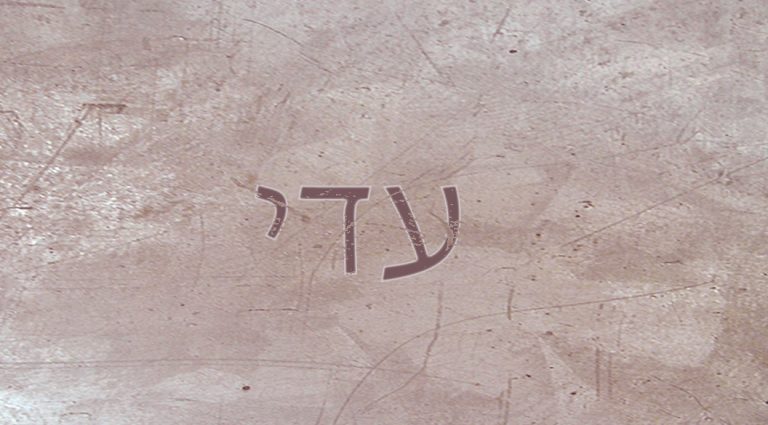
According to the science of onomatology (not taught in seminary), all names either signify something about a person or gradually gain a meaning by association. The meanings of names like “Hope” and “Rose” are self-evident in English. When translated, the meaning of biblical names like “Hadassah (myrtle tree)” and “Peter (stone)” are revealed.
Nicknames and titles are usually given to indicate something about a person beyond their given name. “Sweetheart” is not Mary’s name, but an indication of what she means to her husband. Calling Burt “Cowboy” does not alter his birth certificate; it merely points out that he drives his snow plow like a maniac. Titles also do not constitute alter egos but indicate one’s position. “President Lincoln” was not Abe’s new name, but the title said something about him. Likewise, “Mr. President” was an honorific title indicating his position. The same is true about “Mom,” “Dad,” “Your Honor,” and similar addresses.
The Bible is full of names, titles, images, similes, and metaphors by which God presents himself. “These unveil the essence of who God is, they describe His qualities and character, and they depict his work both in this universe and in our lives.”[1] God knows himself thoroughly and best, and has the privilege of naming himself and revealing himself through his titles and actions.
God’s revealed, personal name is “Yahweh (YHWH, I AM),” (Exodus 3:24). The rest of his appellations are titles, expansions on who he is. The first and most common title for God is “Elohim,” appearing over 2,600 times. “El” was a common, generic name for gods and mighty ones in ancient Middle East cultures. Biblically, it is used for angels, mighty men, and pagan gods; it also appears in many Bible names, e.g., Michael, Elijah, Ezekiel, and Elkanah. When referring to God, El is usually compounded with another word to differentiate him from all other beings. “Because of this general character, it is frequently associated with a defining adjective or predicate.”[2]
“Elohim” first appears in Genesis 1:1: “In the beginning, [Elohim] created the heavens and the earth.” This immediately establishes Elohim as the mighty, magnificent, majestic creator of the universe in all of its manifestations. The chapter continues on to reveal that Elohim created all matter and energy (and, by inference, the laws that rule them) ex nihilo by merely speaking them into existence. This is a far, transcendent cry from anything man “creates.” Man merely reshapes what God created.
The title “Elohim” baffles scholars because it is a masculine plural noun linked to singular verbs. This has been attributed to “plural of majesty,” polytheism, intensity, and the Trinity. When used as a title for God, the verbs are singular. In other instances, the verbs are plural. Although Old Testament believers may not have fully comprehended the concept, it is most logical and contextual[3] to see Elohim as a plurality of “Els,” or persons, acting as one God. Further study reveals that the Father, Son, and Holy Spirit were active in creation. “[B]ut in these last days he has spoken to us by his Son, whom he appointed the heir of all things, through whom also he created the world” (Hebrews 1:2, ESV, emphasis added). Note the “he” and “his,” obviously referring to the Father, and the mention of the Son as creator. “And the Spirit of God was hovering over the face of the waters” (Genesis 1:2, ESV). All members of the Trinity were together, at the same time and in the same place (as it were), working on the same creation. Elohim, a plurality of mighty ones acting in one verb.
The Father is mighty: “You rule over all the kingdoms of the nations. In your hand are power and might, so that none is able to withstand you” (2 Chronicles 20:6, ESV).
The Son is mighty: “[G]od anointed Jesus of Nazareth with the Holy Spirit and with power” (Acts 10:38, ESV). “For the word of the cross is folly to those who are perishing, but to us who are being saved it is the power of God” (1 Corinthians 1:18, ESV).
The Holy Spirit is mighty: “May the God of hope fill you with all joy and peace in believing, so that by the power of the Holy Spirit you may abound in hope” (Romans 15:13, ESV).
YHWH, I AM, is the root from which all other names of Deity are nourished. We can trust that, whatever the times and circumstances of our life, God is Elohim, the Mighty One—always was, always will be. He is whatever descriptor is linked to El. He is what he is and can do what he promises because he is the Mighty One—apart from, and above, all other mighty ones.
[1] Larry Richards, Every Name of God in the Bible (Nashville: Thomas Nelson, Inc., 2001), 1.
[2] G. T. Manley, “God, Names of,” The New Bible Dictionary, Wm. B. Eerdmans Publishing Company, 1962.
[3] “Then God said, ‘Let us make man in our image, after our likeness. And let them have dominion … “ (ESV, emphasis added. Notice that “man” is singular but “them” is plural. Also, God must have been talking to someone.)