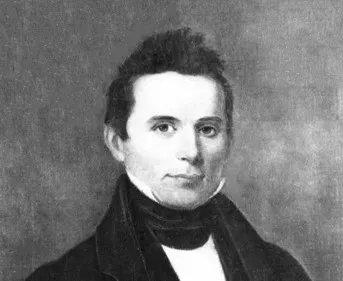
Bavinck for Kids

Some people were surprised when I said I was writing a biography of Herman Bavinck for kids. Although his name is gaining greater recognition even outside Reformed circles, most people see Bavinck primarily as an academic author of extensive works such as his four-volume Reformed Dogmatics. He studied, he wrote, he spoke, he preached. As weighty as his writings are, how do you make all this exciting enough for a child?
While the story is not filled with exotic travels, pirate ships, or magic powers, it can be even more exciting because Bavinck is more relatable than a superhero. Many children can see themselves in the story of a Christian boy who learned from his parents to enjoy learning, to be curious about the world and new inventions, and to face tragedies (such as the deaths of multiple siblings) with faith, recognizing God’s presence in every phase of life.
Some may relate to early feelings of romantic love and to the fun of writing encrypted messages, or messages that can be understood only when read a certain way. They may relate to close friendships that survive even when separated by miles of land or water. And they may relate to the difficult task of choosing a school or vocation.
Much has been written about Bavinck’s choice to enroll in the theologically liberal University of Leiden, famous for questioning the Bible’s divine inspiration. Many have highlighted the opposition of Bavinck’s church to this choice. In reality, many (including his parents) backed his decision, and most of his teachers agreed that he and his parents were capable to choose what was best in their situation.
This is, in itself, a valuable lesson for children. Reading Bavinck’s biography, they can identify with his doubts, questions, and emotions while he carefully considered the pros and cons of his choice, and they can learn that what may be inadvisable for one person might be wise for another.
They can also see how Bavinck was able to face the different challenges he met in college and how the faithful local church he attended every week provided solid ground. They can read how he learned from his teachers, even those that disagreed with his faith. For example, they may learn how an atheist’s passion for justice can be admired, and how Christians can acknowledge the injustices committed by some in the name of Christianity, without concluding that Christianity itself is to blame. Rather, they can learn from Abraham Kuyper (one of Bavinck’s visiting teachers) that such injustices can be prevented not by abandoning or banning Christianity, but by rediscovering true biblical teachings about love and concern for one’s neighbor.
Children can also draw important lessons from Bavinck’s lifelong friendship with Christiaan Snouck Hurgronje, a fellow student at Leiden who later converted to Islam. While the two ended up disagreeing in religious matters, they continued to correspond and valued each other’s opinions. Bavinck even sent Snouck some of his writings, believing that a different point of view could help him consider different sides of each question.
After college, Bavinck faced more decisions. Should he become a pastor or a professor? Once again, children can learn through Bavinck’s decision-making. They can also learn about the challenges and joys of a pastor’s life and the thoughtful process of choosing a spouse.
As Bavinck’s life moved from one century to the next, young readers can learn from his example in facing new questions and situations: church disunity, racism, new philosophies, war, and women’s rights to vote and to education.
After Bavinck’s death, his legacy continued as his wife Johanna kept supporting women in their changing roles in society, and their daughter and her Johanna Geziena and her family resisted Hitler’s occupation of the Netherlands and genocide of Jews – at the cost of their lives (two of their children were executed by the Nazis).
As they turn the last pages of Bavinck’s biography, children will realize that his life was anything but boring. In fact, since most of us live ordinary lives in challenging times, reading how an ordinary man and his family faced some of these challenges can be more instructive and leave a greater mark than reading about superheroes zapping villains.