Early Heresies: Pelagianism

Some diseases are more pernicious, causing more damage to the body, than others. And in like fashion some heresies tend to have a kind of pernicious staying power that cause significant damage to the body of Christ more than others. Pelagianism is one such heresy. Not only did it bring significant injury during the 5th century under the teaching of Pelagius and his followers, it continued to rear its ugly head during the 14th and 15th centuries through the nominalism of Ockham and Biel[1], found support in the 18th century through the teachings of John Wesley and later Charles Finney[2], and even some thinkers have labeled our current libertine moment as “the Age of Pelagius.”[3]
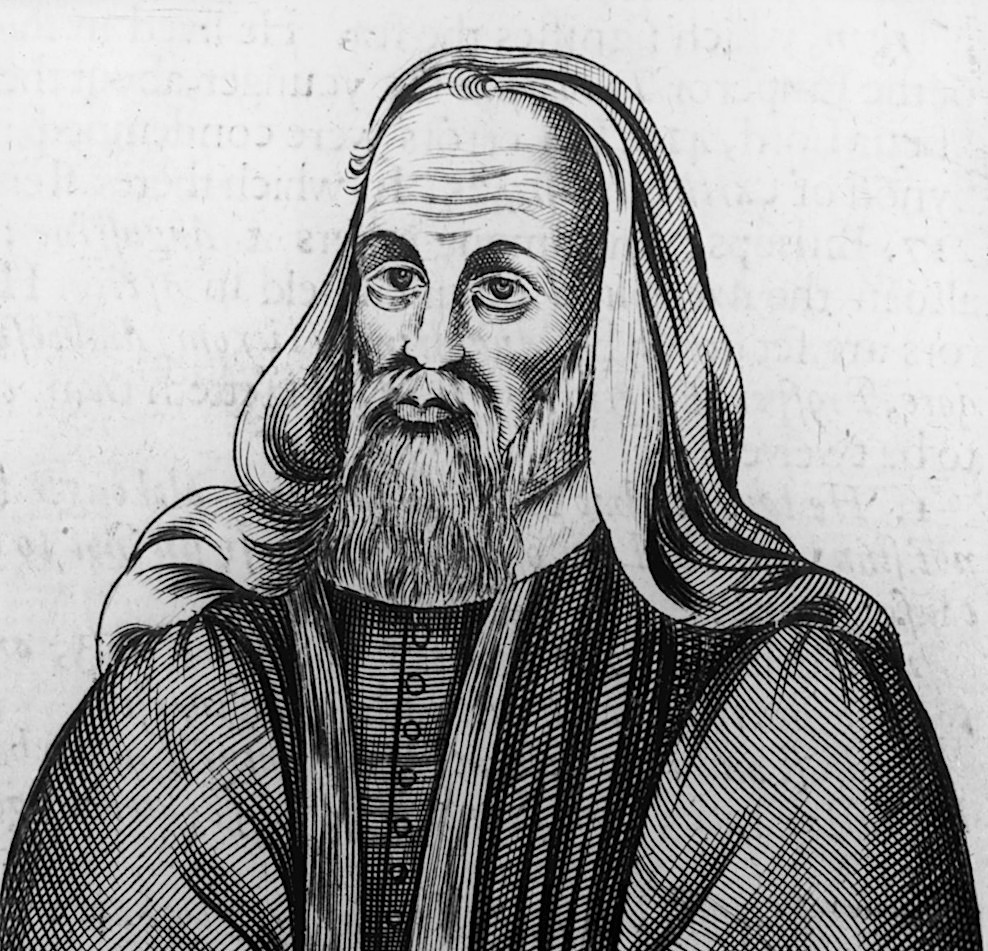
So what is this heresy and why is it so rotten? It, of course, draws its name from the man who first taught it, the British “monk” Pelagius.[4] And whether it appears in its full form or its veiled form, semi-Pelagianism, it’s a teaching that strikes at the vitals of orthodoxy. Specifically, it twists the Bible’s clear teachings in three key areas: the nature of man, the nature of sin, and the nature of God’s grace. Let’s look at each of these in turn.
Mankind: Righteous or Fallen?
When Pelagius made his way to Rome he was shocked by the moral laxity he observed in the Christians present there. Soon after he thought he found the culprit. Augustine’s Confessions were being widely read and when he got a hold of the book, he became triggered by a particular passage:
“On your exceedingly great mercy rests all my hope. Give what you command, and then command whatever you will. You order us to practice continence… O Love, ever burning, never extinguished, O Charity, my God, set me on fire! You command continence: give what you command, and then command whatever you will.”[5]
For Pelagius, this kind of prayer and attitude was the problem. Why? He thought that Augustine was undermining mankind’s innate ability to obey. Why would God command something that, according to Augustine, men could never obey unless helped first by God’s supernatural grace? For Pelagius, God’s commands assumed man’s ability and how dare Augustine suggest that man had no ability? This kind of Augustinian reliance upon outside help hamstrung men, Pelagius thought, from doing what needed to be done. It’s not God’s responsibility to obey, but man’s, and to place this responsibility upon God was a denial of human agency.
This gets at a major component of Pelagius’ system and how he understood the nature of mankind: he 1) denied that humanity after Adam had lost its original righteousness and 2) he denied that the human will was thus bound by and warped under sin. For Augustine, taking his cue mainly from Romans 5, after Adam “sin came into the world through [that] one man, and death through sin, and so death spread to all men (Rom. 5:12). If Adam was originally posse non peccare, posse peccare (able not to sin yet also able to sin), now, after the fall, all men are born into this world non posse non peccare (not able not to sin). Augustine would respond to Pelagius by citing and expounding Philippians 2:12-13, “my beloved, as you have always obeyed, so now, not only as in my presence but much more in my absence, work out your own salvation with fear and trembling, for it is God who works in you, both to will and to work for his good pleasure.” See(!), said Augustine, our very ability to obey comes from God’s grace first working in us. Without it we are lost in the deadness of our sin.
So how did Pelagius then understand what grace actually is? For him it was 1) God’s gift of natural free will and 2) the gift of God’s moral law.[6] “Free will we do so own… and they are in error who say… that a man cannot avoid sin, as they who affirm with Jovinian that a man cannot sin; for both of these take away freedom of the will.”[7] How was it that Pelagius could remain so committed to the idea that all men still have a free will, able enough to even resist giving into sin? Well, he outright denied that mankind was stained by Original Sin.
Sin: Original or Habit?
Pelagius was adamant that Adam did not pass on to his posterity the corruption of his sin. In his commentary of Romans 5:12 that “sin came into the world through one man” he argued that sin only spread through humanity by example, and even that was not universal – many people, men like Enoch and Elijah, and many even today are able through the agency of free will to never sin. What makes someone to be a sinner then is not, argues Pelagius, the corruption of Adam’s nature in all humanity – Original Sin – but men merely choosing to follow Adam’s example. “I find that there was no disbelief in [Adam] but only disobedience, which was the reason why he was condemned and why all are condemned for following his example.”[8]
In other words, contrary to Reformed orthodoxy which posits that all men sin because we are first sinners, being sons of Adam as we all are, Pelagius argues that we only become sinners once we first sin and give in to a habit of sin. Bradley Green explains that “Pelagius is quite clear that persons subsequent to Adam (i.e., Adam’s descendants) follow Adam by imitation rather than by propagation… Pelagius tends to emphasize that there is a fundamental continuity between pre-fall Adam (Adam before the fall) and post-fall man (all of Adam’s descendants).”[9] The question then arises: what then for Pelagius is the nature of saving grace? If, according to Paul “all have sinned and fall short of the glory of God, and are justified by his grace as a gift,” what exactly does Pelagius think that gracious gift is? It is here where Pelagius denies the very Gospel.
Grace: Natural or Supernatural?
Because all doctrines are connected, we can see how Pelagius gets the Gospel so wrong. By denying Original Sin, all in an effort to uphold free will, he went on to deny a Biblical understanding of Electing Grace, Saving Grace, and Sanctifying Grace. Remember, for Pelagius, grace is nothing more than doing what we in our nature have been created to do, which is obey God. That’s the grace – that God has given us all, not just Adam, a nature able to obey. And therefore – and this is key – we can by nature refuse to follow Adam’s example and instead follow Christ’s example. This is, of course, nothing more than works righteousness and an outright denial of our utter need of Christ’s active obedience and substitutionary death on our behalf.
In response to Pelagius, Augustine maintained the Biblical truth that it is rather through “grace by which nature is set free and ruled.”[10] Grace is God working on our behalf not only despite our sin but to even overcome our sinful nature. And he does so – in Trinitarian fashion – by first, graciously electing us to salvation, secondly, graciously sending His Son to die on our behalf, and thirdly, graciously working in us through His Spirit to free us from our Original corruption and unto obedience. All three of these Pelagius denied. But it’s perhaps the second denial that is the most striking. For Pelagius, human nature was capable by itself to attain perfect righteousness. This, according to Augustine – and with a clear nod to Galatians 2:21 – was to posit that Christ, in fact, died in vain.[11]
Hence, to follow the Pelagian system was to follow a different Gospel. And to allow the poison of Pelagianism to persist within the body of Christ was allowing a cancer to run free. After decades of Augustine writing and fighting against this error, the early church officially condemned Pelagianism as a heresy at the Council of Carthage (418), the Council of Ephesus (431), and the Second Council of Orange (529).
[1] See Harrison Perkins, Righteous by Design: Covenantal Merit and Adam’s Original Integrity (Mentor, 2024), 122-130
[2] See Lee Gatiss, “Wesley and Pelagius”, https://reformation21.org/wesley-and-pelagius-php/
[3] See Johua Hawley, “The Age of Pelagius”, Christianity Today (June 4, 2019), https://www.christianitytoday.com/2019/06/age-of-pelagius-joshua-hawley/
[4] Bradley G. Green writes that that “perhaps” Pelagius was a monk. “It is common to. describe Pelagius as a monk. This is debated. B.R. Rees suggests that he might be called an ‘honorary monk,’ in view of his undoubted adoption of an ascetic way of life.” Bradley G. Green, “Give What You Command, and Then Command Whatever You Will” in Ruined Sinners to Reclaim: Sin and Depravity in Historical, Biblical, Theological, and Pastoral Perspective, edited by David Gibson & Jonathan Gibson (Crossway, 2024), 42
[5] Augustine, Confessions X.29.40; found in Bradley Green, “Give What You Command, and Then Command Whatever You Will”, 43
[6] See Nick Needham, 2000 Years of Christ’s Power: The Age of the Early Church Fathers, vol. 1 (Christian Focus, 2016), 276
[7] Pelagius, Confession of Faith 25; https://early church texts.com/public/pelagius_letter_and_confession_to innocent.htm; found in Bradley Green, “Give What You Command, and Then Command Whatever You Will”, 48
[8] Pelagius, On the Christian Life 13.2, found in Bradley Green, “Give What You Command, and Then Command Whatever You Will”, 47
[9] Bradley G. Green, “Give What You Command, and Then Command Whatever You Will” in Ruined Sinners to Reclaim: Sin and Depravity in Historical, Biblical, Theological, and Pastoral Perspective, edited by David Gibson & Jonathan Gibson (Crossway, 2024), 49
[10] Augustine, Retractions II.68.42 (on Nature and Grace).
[11] Augustine, Nature and Grace II.2. See Bradley Green, “Give What You Command, and Then Command Whatever You Will”, 55