The Magnificat, Pt 3: Did Mary Know?

Mary, did you know
That your baby boy will one day walk on water?
Mary, did you know
That your baby boy will save our sons and daughters?
Did you know
That your baby boy has come to make you new?
This child that you’ve delivered
Will soon deliver you.
This well-known Christmas song first debuted in 1991, written from a reflection of what the songwriter would ask Mary if he ever had a conversation with her. Did she know Who she was holding in her arms and what He would accomplish as they sat amidst the animals that night?
Mary’s prayer provides us with the answer.
God’s Sovereignty
Mary continues her prayer in v. 51-55 by recounting the deeds God has done throughout Israel’s history using a series of contrasts. I listed a few events or passages Mary might have been thinking of when she said these words, but this list is by no means exhaustive.
“He has done a mighty deed with His arm” (v. 51a).
The first thing that came to mind here is the story of the Exodus. The Old Testament frequently references God’s mighty hand and outstretched arm in connection to Israel’s deliverance from Egypt with the various plagues and Red Sea Crossing that God accomplished (Ex 6:6; Dt. 4:34; Ps. 136:10-22). It also applies to the great victories of God in protecting and providing for Israel in the wilderness wanderings, the Conquest, David’s victories, and the many armies Israel has defeated over its history in supernatural ways. And yes, this certainly applies to the baby in her womb.
“He has scattered those who were proud in the thoughts of their heart” (v. 51b).
Perhaps Mary is thinking of the story of the Tower of Babel in Genesis 11:1-9. The people wanted to build a city and a name for themselves and prevent themselves from being scattered across the lands in direct opposition to the God’s command to fill the earth. But God changed their languages and scattered them anyway. This also applies to Israel as a nation being sent into exile, having been caught in idolatry and refusing to repent and turn back to the Lord despite the warnings of the prophets.
“He has brought down rulers from their thrones” (v. 52a).
The book of Daniel is full of examples of this from the empires represented in the statute in Daniel 2, King Nebuchadnezzar in Daniel 4 being humbled to live in the fields, or Belshazzar in Daniel 5 whose kingdom and life was taken from him the very night he saw the writing on the wall in the midst of his feasting. We can again think of various kings throughout Israel’s history, both foreign and national, that God removed from their authority. It also reminded me of Psalm 2, with the kings of the earth making plans against God and Messiah and meanwhile, He sits up in the heavens and laughs at them because they will never succeed.
“And has exalted those who were humble” (v. 52b)
Job 5:11 says, “He sets on high those who are lowly, and those who mourn are lifted to salvation.” Remember – Nebuchadnezzar didn’t stay in that field! He was restored to his place when he lifted his eyes to heaven and blessed the Lord as Daniel 4:34-37 records. We could also think of the examples of Ruth, Esther, and David, who came from lowly backgrounds, but the Lord raised up and used for His purposes. And this still holds true today, as Jesus said “I tell you, this man went down to his house justified rather than the other, for everyone who exalts himself will be humbled, but he who humbles himself will be exalted” (Lk. 18:14).
“He has filled the hungry with good things, and sent away the rich empty‑handed.” (v. 53).
Again, this verse is in capital letters, so she is directly quoting Scripture. Scholars connect this to Psalm 107:9, “For He has satisfied the thirsty soul, And the hungry soul He has filled with what is good.” This provision is true both physically and spiritually: “And He humbled you and let you be hungry and fed you with manna which you did not know, nor did your fathers know, that He might make you know that man does not live by bread alone, but by everything that proceeds out of the mouth of Yahweh” (Dt. 8:3). His people never need to fear having their physical needs met, but most importantly, He has provided what we need to satisfy our souls through His Word. And the rich may prosper now, but this may be the only reward they get if they do not know Christ as Savior.
She ends her song with a recognition of why God has done all these things for Israel: “He has given help to Israel His servant, in remembrance of His mercy, as He spoke to our fathers, to Abraham and his seed forever” (v. 54-55). Mary recognized that God had been faithful to give help to Israel and done all those things she just recounted because of His covenant promises. Perhaps she thought of Psalm 98:3 which says “He has remembered His lovingkindness and His faithfulness to the house of Israel; All the ends of the earth have seen the salvation of our God” (see also Ps. 105:8-10). Despite all Israel’s sinfulness, nothing would break these covenant promises made by God with His people. In fact, at the various times God threatened to wipe Israel off the face of the earth, men appealed to Him for mercy on the basis of the covenant He made (Ex. 32:11-14). In Judges 2, the writer recounts the cycle of Israel’s disobedience, repentance, deliverance, and repeat. But the Lord kept providing deliverance despite their constant failure. And He did it in remembrance of that mercy that He has shown from generation to generation.
We can summarize the Abrahamic Covenant first instituted by God in Genesis 12:1-3 in three promises: land, seed, and blessing. Though they have been fulfilled in part throughout Israel’s history in the various events we have just described, these everlasting covenant promises looked to an ultimate future fulfillment. That greatest help and ultimate mercy would come through the One Mary carried.
The angel had told her, “And behold, you will conceive in your womb and bear a son, and you shall name Him Jesus. He will be great and will be called the Son of the Most High, and the Lord God will give Him the throne of His father David, and He will reign over the house of Jacob forever, and there will be no end of His kingdom” (Lk. 1:31-33). The angel told Joseph He would be called Jesus because He will save His people from their sins (Mt. 1:21).
Mary knew what His name meant and that He was the Savior they had been waiting for. She knew He would be the everlasting Davidic king. She knew He was going to be the fulfillment of the Abrahamic Covenant. He is the One who will one day restore Israel to their land and reign over them from Jerusalem. He is the ultimate Seed, the everlasting king that would come from Abraham’s line. He is the One through whom all families of the earth will be blessed.
So, in answer to our starting question, yes, as matter of fact, she did know. Probably not that He would walk on water, but that He would be the Savior of the world? Yes, she absolutely did. And she knew this and could recount and praise God in all these ways because she knew His Word.
To be continued.
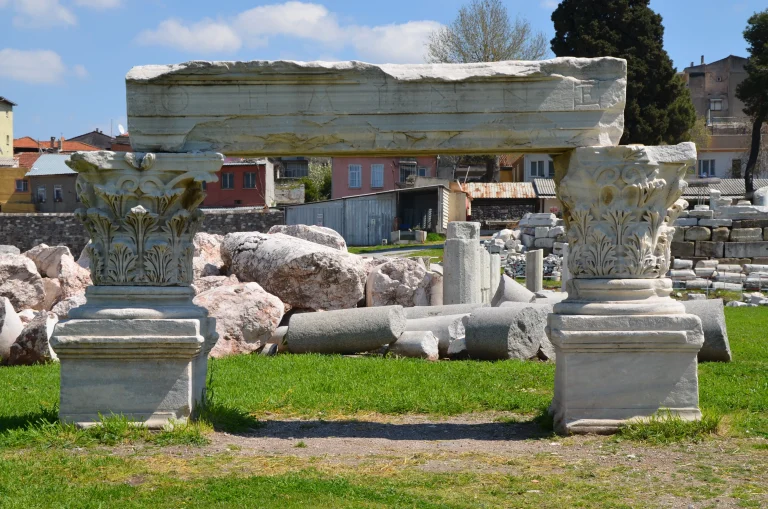
Photo: By Asia – Own work, CC BY-SA 4.0, https://commons.wikimedia.org/w/index.php?curid=61627017